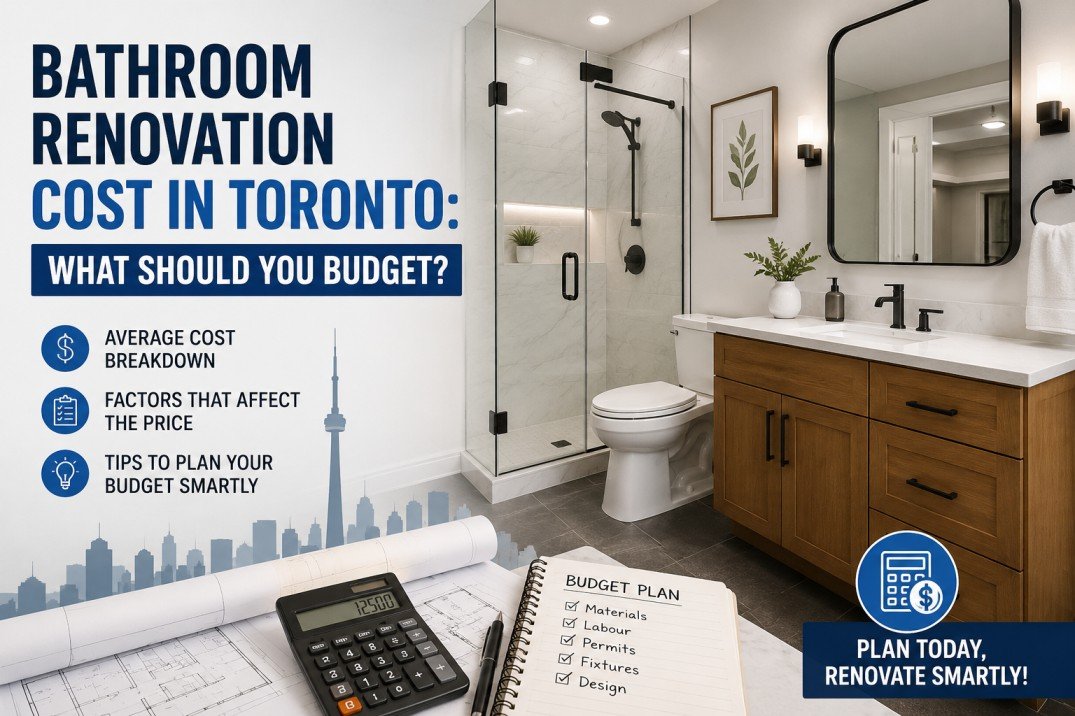
You may have a clear idea of how you want your new bathroom to look, but the budget can be harder to work out. A new vanity, better tiles, a walk-in shower, or a layout change can all affect the final price.
For homeowners in Toronto, the cost of a bathroom renovation can be very different from one project to another. A small bathroom with simple finishes will usually cost less than a large ensuite with custom features. The condition of the existing bathroom also matters.
Before you start your renovation, it helps to know what you may need to spend. This guide covers common bathroom renovation costs in Toronto, pricing by bathroom size, major cost factors, hidden expenses, and simple ways to keep your project within budget.
Average Bathroom Renovation Cost in Toronto
A bathroom renovation in Toronto can cost anywhere from about $8,000 to $50,000 or more. The amount you spend depends on the size of the room, the type of work, your material choices, and how much you change.
For a standard renovation, many homeowners can expect to spend around $15,000 to $25,000. A simple refresh may fall below this range, while a custom or luxury bathroom can go well above it.
Here is a general starting point for different renovation levels:
| Type of Bathroom Project | Estimated Cost |
| Basic bathroom refresh | $8,000–$15,000 |
| Standard bathroom renovation | $15,000–$25,000 |
| Primary ensuite upgrade | $25,000–$40,000 |
| High-end bathroom renovation | $40,000–$50,000+ |
These figures are general estimates for labour and materials. Custom products, plumbing changes, structural repairs, premium finishes, and other extra work can raise the final price.
Quick answer: A typical bathroom renovation in Toronto may cost around $15,000 to $25,000, while large and custom projects can cost $40,000 to $50,000 or more.
Bathroom Renovation Cost by Room Size
The size of your bathroom is one of the first things that can affect your renovation budget. More space usually means more flooring, wall materials, fixtures, labour, and finishing work.
A small bathroom can still have a higher price if you choose expensive materials or make major layout changes. So, room size is important, but it is not the only cost factor.
| Bathroom Type | Approx. Size | Estimated Renovation Cost |
| Powder room | 20–30 sq. ft. | $12,000–$18,000 |
| Small bathroom | 30–50 sq. ft. | $15,000–$22,000 |
| Family bathroom | 50–70 sq. ft. | $18,000–$30,000 |
| Primary ensuite | 70–100 sq. ft. | $30,000–$40,000 |
| Large luxury bathroom | 100+ sq. ft. | $40,000–$50,000+ |
These numbers are only planning ranges. Your contractor can give you a better estimate after looking at the bathroom, existing layout, materials, and work required.
Powder Room Renovation
A powder room is usually one of the smallest spaces in a home. Since it often has only a toilet and sink, you may not need as much plumbing, tile, or flooring.
A new vanity, sink, toilet, mirror, lighting, flooring, and paint can give a powder room a fresh look without the cost of a full bathroom.
Small Bathroom Renovation
A small bathroom can be updated in many ways. You may replace the bathtub or shower, vanity, toilet, flooring, wall tile, and lighting.
Keeping the current layout can help control costs. You can also use simple tile patterns and standard-size fixtures to keep the project more affordable.
Family Bathroom Renovation
A family bathroom needs to handle regular use, so strong and easy-to-clean materials are often a good choice.
A renovation may include a new tub or shower, vanity, toilet, storage, flooring, wall tile, lighting, and exhaust fan. Extra storage can also make a busy family bathroom easier to use.
Primary Ensuite Renovation
A primary ensuite gives you more room to add comfort-focused features. Many homeowners choose a larger shower, double vanity, better storage, upgraded lighting, and heated flooring.
Changing the layout or adding custom features can increase the total cost, but it can also give you a bathroom that better fits your daily routine.
Luxury Bathroom Renovation
A luxury bathroom can include custom cabinets, premium tile, natural stone, a freestanding tub, frameless glass, specialty lighting, and smart fixtures.
The more custom work you add, the more your budget can increase. A luxury project can easily move beyond the standard renovation range.
Main Factors That Change Bathroom Renovation Pricing
Two bathrooms of the same size can have very different renovation costs. The difference often comes down to the amount of work involved and the products selected.
Here are some of the biggest factors to consider.
Size of the Bathroom
A larger room normally needs more materials and more labour. You may need additional flooring, wall tile, paint, lighting, fixtures, and finishing work.
A smaller bathroom can cost less, but a high-end design or major plumbing work can still push the price up.
Choice of Materials
Your material choices can have a major effect on the budget.
Basic ceramic tiles, standard vanities, and regular fixtures can help keep costs down. Porcelain tile, quartz counters, custom cabinets, natural stone, and designer fixtures will usually require a larger budget.
Labour
Skilled labour makes up a large part of a bathroom renovation budget. Your project may involve several trades, including plumbers, electricians, tile installers, drywall workers, and painters.
The amount of labour depends on what needs to be removed, repaired, moved, and installed.
Plumbing Changes
Keeping the toilet, sink, tub, and shower in their current locations can often save money.
Moving these fixtures means changing water lines and drain pipes. This takes additional labour and may require more work inside the walls or floor.
Electrical Upgrades
New lights, outlets, heated floors, exhaust fans, mirrors, and other electrical features can add to the cost.
Older Toronto homes may also need electrical work before new bathroom fixtures can be installed safely.
Changing the Layout
A layout change usually costs more than updating the existing bathroom design.
Moving a shower, toilet, vanity, or wall can involve plumbing, electrical, framing, flooring, and other work. If your current layout works well, keeping it can be one of the easiest ways to control the budget.
Custom Bathroom Features
Custom features give you more control over the final design but can increase the price.
Examples include:
- Custom vanity cabinets
- Built-in shower storage
- Large walk-in showers
- Freestanding tubs
- Frameless glass
- Heated bathroom floors
- Smart bathroom fixtures
- Custom lighting
Condition of the Existing Bathroom
The bathroom underneath the finished surfaces can also affect your budget.
Old plumbing, water damage, weak subfloors, damaged walls, outdated wiring, or mould may not be visible before demolition. If these issues are found, they need to be fixed before the renovation can continue.
What You May Pay for Each Part of the Renovation
A bathroom renovation includes many separate jobs. Some projects need nearly all of them, while others may only require a few.
The following ranges can help you see how different parts of the work may fit into your budget.
| Part of the Renovation | Typical Cost Range |
| Demolition | $800–$2,000 |
| Plumbing | $1,500–$5,000 |
| Electrical | $800–$2,500 |
| Waterproofing | $800–$2,000 |
| Floor and wall tile | $2,500–$8,000 |
| Vanity and countertop | $1,000–$5,000 |
| Toilet | $400–$1,500 |
| Tub or shower | $2,000–$8,000 |
| Glass shower door | $1,200–$3,500 |
| Lighting and exhaust fan | $500–$2,000 |
| Painting and finishing | $500–$1,500 |
These are individual cost ranges, not a package price. Not every renovation needs every item, and some costs may overlap as part of a contractor’s overall project price.
Removing the Old Bathroom
Before new work can begin, the old flooring, tile, vanity, fixtures, and other materials may need to come out.
Bathroom demolition services can vary in cost based on the size of the room and the amount of material being removed.
Plumbing Work
Plumbing work may include new water lines, drains, faucets, toilets, sinks, tubs, and showers.
Keeping your existing fixture locations can make this part of the renovation simpler. Moving plumbing usually adds labour and material costs.
Electrical Work
Electrical work can include new lights, switches, outlets, exhaust fans, heated floors, and other bathroom features.
If your home has older wiring, additional upgrades may be needed before the new bathroom is finished.
Waterproofing
Waterproofing is especially important around showers, tubs, and other wet areas. It helps protect the structure behind your finished surfaces from moisture.
Bathroom waterproofing services can be an important part of a bathroom renovation where wet areas are being rebuilt.
Flooring and Wall Tile
Tile can be one of the larger material and labour costs in a bathroom renovation.
The price depends on the type of tile, size, pattern, installation method, and amount of surface being covered. Simple ceramic tile will usually cost less than premium porcelain or natural stone.
Vanity and Countertop
A standard vanity can help keep the budget under control. Custom cabinetry and stone countertops can cost more but give you more control over storage, size, and appearance.
Toilet
A toilet is usually a smaller part of the overall renovation budget. Your final price will depend on the model you choose and the installation work required.
Tub or Shower
The shower or bathtub can take up a larger part of the budget, especially when you choose custom features.
A standard tub and surround may cost less than a large walk-in shower with glass, built-in niches, multiple fixtures, and custom tile work.
Shower Glass
A framed shower door is generally less expensive than a custom frameless glass enclosure.
The final price can depend on glass thickness, size, hardware, shape, and installation.
Lighting and Ventilation
Good lighting can improve how the bathroom looks and works. A proper exhaust fan also helps remove moisture from the room.
You may need several types of lighting, such as ceiling lights, vanity lights, or shower-safe fixtures.
Painting and Final Details
The final stage may include painting, trim, caulking, hardware, touch-ups, and other small finishing jobs.
These details may seem minor, but they help bring the whole bathroom together.
Extra Costs You Should Keep in Mind
A renovation quote may cover the planned work, but older bathrooms can sometimes have problems hidden behind walls or under floors.
Setting aside some extra money can help you deal with these issues without putting the project on hold.
Water Damage
An old leak may have damaged the floor, drywall, framing, or other parts of the bathroom.
The damaged material may need to be removed and replaced. The source of the leak should also be repaired before new finishes are installed.
Mould
Mould can develop in areas that stay damp for a long time.
If mould is found during demolition, the affected area may need proper cleaning or removal. The moisture problem should also be dealt with so the issue does not return.
Subfloor or Structural Problems
A bathroom floor needs a strong and stable base.
Rotten wood, damaged subflooring, or other structural issues may need to be repaired before new tile or flooring is installed. These repairs can add to the original estimate.
Permits
Some bathroom renovation work may require permits, especially when the project involves certain plumbing, electrical, structural, or layout changes.
Permit needs can depend on the work and local requirements. Your contractor can help you determine what applies to your project.
Waste Removal
Old tile, drywall, cabinets, flooring, toilets, tubs, and other materials create waste during demolition.
A disposal bin or waste removal service may be needed. The amount of waste usually depends on the size and scope of the renovation.
Delivery Charges
Large bathroom items can come with delivery fees.
This may include vanities, tubs, shower glass, tile, countertops, and other materials. If you order from several suppliers, you may also have several separate delivery charges.
Unexpected Plumbing Problems
Older plumbing can sometimes cause surprises once the walls or floor are opened.
You may find old pipes, worn fittings, leaks, or other problems. A layout change can also require new plumbing work.
Set Aside a Contingency Fund
A practical way to prepare for surprises is to keep about 10% to 15% of your renovation budget aside.
You may never need this money, but having it available can help cover unexpected repairs without affecting the rest of your project.
Simple Ways to Keep Your Bathroom Renovation Affordable
You do not have to choose the cheapest products to control your bathroom renovation cost. Good planning can make a big difference.
Get a Few Detailed Quotes
Ask two or three contractors for quotes and compare what each one includes.
Do not look only at the final number. Check the labour, materials, demolition, disposal, installation, and other services included in each quote.
A very low quote may not include some work that another contractor has already listed.
Shop Around for Materials
Compare prices for tiles, vanities, faucets, lighting, toilets, and other products.
Sales and clearance offers can sometimes help you save money. Just make sure the products you buy are suitable for your bathroom and fit your renovation plan.
Keep Good Fixtures
Not everything needs to be replaced.
If your toilet, vanity, mirror, or other fixtures are still in good shape, you may be able to keep them and spend your budget on areas that need more attention.
Keep the Existing Layout
One of the simplest ways to reduce major labour costs is to leave your toilet, sink, tub, and shower where they are.
You can still make a big visual change with new tile, flooring, fixtures, lighting, paint, and storage.
Choose Your Materials Early
Make your main product choices before construction starts.
Knowing your tile, vanity, fixtures, countertop, and other finishes ahead of time can reduce delays and help prevent last-minute purchases that cost more.
Avoid Changing the Plan During Construction
A change may seem small, but it can affect several parts of the renovation.
For example, moving a vanity may affect plumbing, electrical work, flooring, and the wall finish. Making key decisions before the work begins can help keep the project on track.
Choose a Contractor Who Can Manage the Project
A bathroom renovation may involve several different trades. Working with an experienced renovation contractor can make it easier to organize the work, materials, and schedule.
Ask for a detailed quote and make sure you know what is included before signing an agreement.
Set a Realistic Budget for Your Toronto Bathroom Renovation
Knowing the possible bathroom renovation cost before work begins can make the whole process easier. Start by deciding what needs to change and which parts of the bathroom matter most to you.
If your budget is limited, keeping the existing layout, choosing practical materials, and reusing good fixtures can help. If you want a custom bathroom with premium finishes, plan for a higher budget from the start.
It is also wise to leave some money aside for repairs or other unexpected work. This can help you avoid major budget problems if something is found during demolition.
Thornhill Bathroom Renovation can help homeowners plan and complete bathroom renovation projects with their space, design goals, and budget in mind.
Ready to plan your bathroom renovation? Contact Thornhill Bathroom Renovation to discuss your project and request a free quote.
Frequently Asked Questions About Bathroom Renovation Costs
What is the average cost of a bathroom renovation in Toronto?
A standard bathroom renovation in Toronto may cost around $15,000 to $25,000. A basic update can cost less, while a larger ensuite or custom bathroom can cost $40,000 or more. Your final price depends on room size, materials, labour, plumbing, electrical work, layout changes, and repairs.
How much does it cost to renovate a small bathroom in Toronto?
A small bathroom renovation may cost around $15,000 to $22,000 as a general planning range. Keeping the current layout can help reduce costs. The price can rise if you add custom cabinets, premium tile, plumbing changes, or other major upgrades.
What does a full bathroom renovation include?
A full renovation can include demolition, plumbing, electrical work, waterproofing, flooring, wall tile, a new vanity, toilet, shower or tub, lighting, painting, and finishing work. The exact scope depends on your bathroom and the changes you want to make.
How can I reduce my bathroom renovation cost?
You can control costs by keeping the current bathroom layout, comparing detailed contractor quotes, shopping for materials during sales, and keeping fixtures that are still in good condition. Planning your products and design before construction can also help prevent costly changes later.
How long does a bathroom renovation take in Toronto?
A standard bathroom renovation may take around two to four weeks, but the schedule can vary. A full renovation with layout changes, custom products, hidden repairs, or material delays may take longer. Your contractor should give you a project timeline based on the actual work planned.