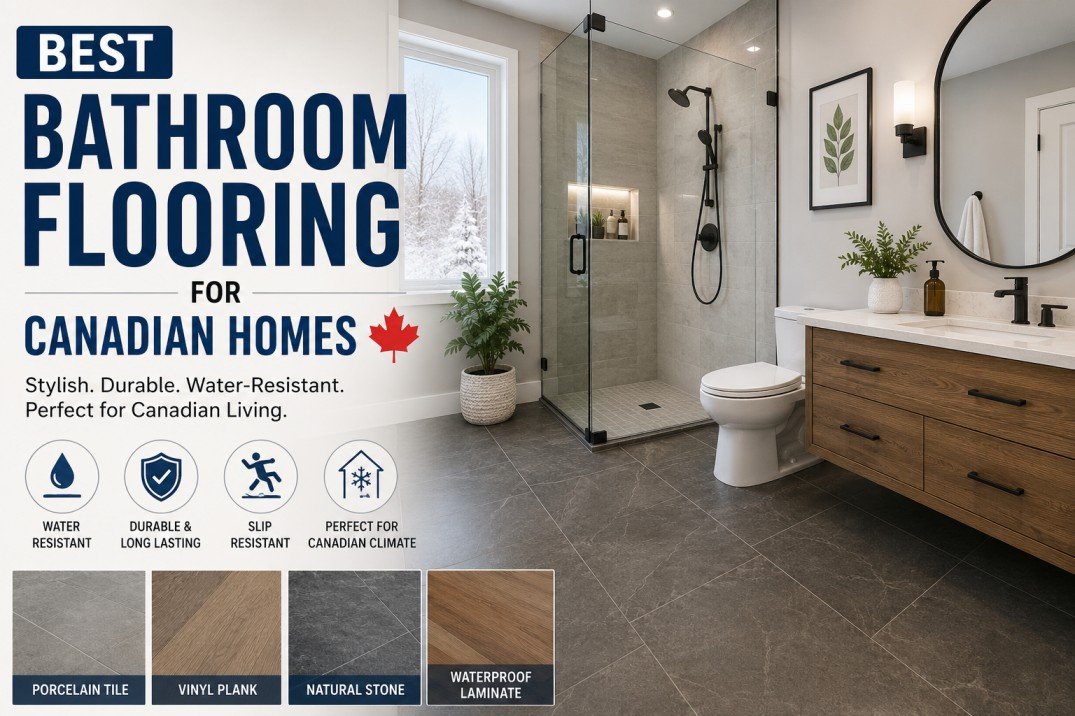
Your bathroom floor has a lot to deal with. It gets wet, sees daily foot traffic, and can feel very cold during a Canadian winter. A floor that is not right for your bathroom may become slippery, wear down quickly, or make the room less comfortable.
The right bathroom flooring can help you create a space that is safe, practical, and easy to care for. You also want a material that can handle moisture and fit the style of your bathroom.
For homes in Thornhill, Toronto, and the GTA, the choice matters even more during the colder months. Some flooring materials work better with heated floors, while others offer a softer feel under your feet.
This guide covers popular bathroom flooring materials, flooring costs, design ideas, choices for different bathroom sizes, and tips for finding the right flooring for your home.
Top Bathroom Flooring Choices for Canadian Homes
There is no single floor that works for every bathroom. Your best choice can depend on how much water the floor sees, your budget, the size of the room, and the style you want.
Here are some common flooring choices to consider for your bathroom.
Porcelain Tile
Porcelain tile is a strong option for bathrooms that deal with a lot of water. It is hard, durable, and available in many colours, sizes, and patterns.
You can choose a simple tile for a clean look or a stone-look design for a more high-end bathroom. Porcelain also works well with many underfloor heating systems, which can be useful during cold Canadian winters.
Ceramic Tile
Ceramic tile is another popular choice for bathroom floors. It comes in a wide range of colours, shapes, and designs, so you can find an option that fits almost any bathroom style.
It is also easy to clean and can work well in both small bathrooms and larger family spaces. For homeowners who want a classic floor without a very high material cost, ceramic can be a practical option.
Luxury Vinyl Flooring
Luxury vinyl flooring can give you the look of wood, stone, or tile at a lower price than many natural materials. It is also softer under your feet than hard tile.
Water-resistant and waterproof vinyl products made for bathrooms can be a good choice for busy homes. There are also many colours and patterns available, making it easy to match the floor with your vanity, walls, and fixtures.
Natural Stone
Natural stone can give a bathroom a rich and high-end appearance. Marble, slate, and granite are some of the materials used for bathroom floors.
Each stone has its own colour and pattern, so the finished floor can have a unique look. Stone can be very durable, but some types need sealing and more regular care than tile or vinyl.
Why Your Bathroom Floor Choice Matters
A bathroom floor needs to do more than look good. It needs to handle water, moisture, cleaning, and regular use without becoming a problem.
In Thornhill and other parts of the GTA, winter weather also makes floor comfort important. A hard tile floor can feel very cold when temperatures drop, especially if the bathroom does not have a heated floor system.
The right flooring can also make daily cleaning easier and help reduce problems caused by moisture. If the floor is strong and installed correctly, you may not have to worry about replacing it too soon.
When planning a bathroom renovation, it helps to choose the flooring along with the rest of the room. The floor should work with your shower, bathtub, vanity, walls, and overall design.
At Thornhill Bathroom Renovation, we can help you choose bathroom flooring that fits your room, style, and budget.
Waterproof and Safe Flooring for Wet Bathrooms
Bathrooms are exposed to water almost every day. Choosing a floor that can handle moisture is important for keeping the room in good condition.
Protection From Water
Water can reach the floor from showers, bathtubs, sinks, and everyday spills. A suitable bathroom floor can help reduce the chance of water reaching areas below the finished surface.
Tile and properly selected waterproof vinyl are common choices for wet bathroom areas.
Moisture Control
Bathrooms can stay damp after showers, especially when there is not enough ventilation. Flooring that handles moisture well can help reduce problems caused by regular damp conditions.
The material is only one part of the job. Proper installation and suitable waterproofing below the finished floor also matter.
Better Grip on Wet Floors
A wet bathroom floor can become slippery. Choosing a flooring surface with good traction can make the room safer.
Matte and textured tile surfaces can offer more grip than very smooth finishes. Smaller tiles can also provide more grout lines, which may add traction underfoot.
Reducing Water Damage and Mold Risk
Water that gets into the wrong areas can cause damage over time. Keeping the floor properly sealed and dealing with leaks or standing water quickly can help protect the space.
Good ventilation, regular cleaning, and proper waterproofing are also important parts of keeping a bathroom dry and healthy.
Bathroom Flooring Comparison: Find the Right Material
Different flooring materials offer different benefits. One may be better for a tight budget, while another may be a better fit for a luxury bathroom or heated floor.
| Flooring Material | Water Resistance | Durability | Care Level | Approx. Material Cost | Heated Floor Use | Good For |
| Porcelain Tile | Excellent | High | Easy | $5–$15/sq. ft. | Yes | Wet areas and busy bathrooms |
| Ceramic Tile | Excellent | High | Easy | $3–$10/sq. ft. | Yes | Everyday bathrooms |
| Vinyl Flooring | High to waterproof, based on product | Good | Very Easy | $2–$7/sq. ft. | Some products | Budget-friendly projects |
| Luxury Vinyl Tile | High to waterproof, based on product | High | Very Easy | $3–$10/sq. ft. | Some products | Family bathrooms |
| Natural Stone | Varies by stone | High | More care | $8–$20+/sq. ft. | Yes | Premium bathroom designs |
For a small bathroom, lighter colours and simple patterns can help the room feel less crowded. Large tiles can also reduce the number of grout lines.
A larger bathroom gives you more room to use bigger tiles, stone-look designs, or a stronger pattern.
For a family bathroom, durability and easy cleaning may be more important because the floor gets used more often. A guest bathroom gives you more freedom to focus on the look.
The right choice should always consider both the size of the room and how the space is used.
Choosing the Right Bathroom Flooring Installation Team
Even a high-quality floor can have problems if it is not installed properly. The base needs to be prepared correctly, the material needs to be installed according to its requirements, and wet areas need suitable protection.
Here are a few things to check before hiring an installer.
- Review past projects: Look at examples of bathroom flooring work to see the quality of the finished floors.
- Ask about the subfloor: The surface below the new flooring should be stable, clean, and level before installation begins.
- Talk about waterproofing: Ask how the team plans to protect areas that are exposed to regular water.
- Check the finish: Tile spacing, grout lines, edges, and transitions should all look clean and even.
- Ask about your chosen material: Different flooring products have different installation needs, so the installer should know how to work with the material you select.
- Discuss the complete project: If your bathroom also needs new walls, a shower, vanity, or other work, using a team that can manage the renovation can make the process easier.
Professional bathroom flooring installation can help prevent problems caused by poor preparation or uneven fitting. It can also help your new floor look better and stay in good condition for longer.
If you are planning a bathroom flooring installation in Thornhill, choose a contractor who can look at the full condition of your bathroom before starting the work.
Give Your Bathroom a Warmer Feel This Winter
A good bathroom floor should work well throughout the year, including the coldest months in Canada. It needs to handle moisture, regular use, and cleaning while also fitting the look of your bathroom.
Porcelain and ceramic are strong choices for many homes, while vinyl and luxury vinyl can offer a softer feel and lower material cost. Natural stone can be a good fit when you want a more premium design.
The material is only part of the decision. Proper floor preparation, waterproofing, and installation also play an important role in how the finished floor performs.
If you are planning a bathroom renovation in Thornhill, the team at Thornhill Bathroom Renovation can help you choose flooring that fits your space, style, and budget.
Ready to update your bathroom floor? Contact Thornhill Bathroom Renovation to discuss your project and request a free quote.
Common Questions About Bathroom Flooring
What flooring works best in a cold Canadian bathroom?
Porcelain tile and waterproof vinyl are both practical choices. Porcelain is strong and can work with many heated floor systems, while vinyl has a softer feel and can be more comfortable underfoot. Your bathroom size, budget, heating plans, and preferred style can help guide the final choice.
Is luxury vinyl a good choice for a bathroom?
Yes, luxury vinyl can work well in bathrooms when you select a product made for wet areas. It is easy to clean, comfortable to walk on, and available in many styles. Always follow the product installation requirements and make sure the floor is fitted correctly.
Which bathroom floor has the best grip when wet?
Look for flooring with a suitable slip-resistant surface rather than a very smooth finish. Matte or textured porcelain and ceramic tiles can provide good traction. Smaller tiles may also offer more grip because of the grout lines between them.
Can heated floors be installed under bathroom flooring?
Heated floor systems can be used with materials such as porcelain, ceramic, and some types of natural stone. Some vinyl products may also be suitable, but you need to check the manufacturer’s requirements. The heating system and flooring should be designed to work together and installed correctly.
What is the cost of bathroom flooring in Thornhill and the GTA?
Bathroom flooring prices depend on the material, room size, labour, and preparation work. As a general guide, vinyl may cost around $2–$7 per sq. ft. for materials, while porcelain may cost around $5–$15 per sq. ft. Installation, old floor removal, subfloor repairs, waterproofing, and other work can increase the final cost.